Inner and Outer Life

Author: Daryl Chow, MA, Ph.D. (Page 7 of 7)

Three Surprising Facts About Psychotherapy You and Your Doctors Need to Know

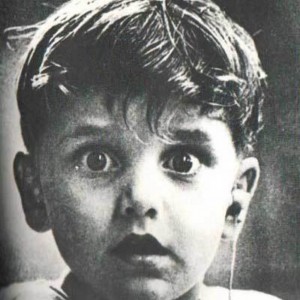
boy hearing for the first time (w hearing aid)

With the help of a hearing aid, boy hears for the first time.

This is for those who are thinking about seeking help. Maybe you are wondering, unsure of who to go to and what to look out for. Or maybe you just need a reason to give a shot at therapy/counselling before you take a psychotropic drug for your emotional problems.

Click here to find out more: Three Surprising Facts About Psychotherapy You and Your Doctors Need to Know

boy with new pair of shoes_overjoyed

Boy overjoyed with a new pair of shoes

Like the images of the two boys, I hope you get the help you deserve, and experience a renewed sense of joy in your life.

Best,
Daryl Chow, PhD

You might also be keen to read

The Dark Side of Pursuing Happiness

Or from my other blog, Frontiers of Psychotherapist Development:

Why Our Self-Assessment Might be a Delusion of Reality

Clinical Practice vs. Deliberate Practice: Why Your Years of Experience Doesn’t Get You Better

The Playful Present


Playful Present (See-Saw)


The present is a gift inviting us to open our doors. It flowers when we can embrace our history and welcome all  doors of possibilities of our future. 

This means that we allow ourselves to touch and heal past wounds, and live without anxiety of the unseen tomorrows.

Like a see-saw, it’s not easy (and probably of no use) to attempt to balance one side of the past and the other of the future in equilibrium. Rather, we show learn to play with it.  And when we do, we become flexible enough in the currents of change, and become inspiringly responsive, not reactive, to situations.

This form of  movement and openness – or vulnerability, is an antidote for the modern soul. Much like the jazz improviser responsing to the unforeseen musical turn that is up ahead, co-creating something vibrant and alive, and even joyfully unexpected; the moment-by-moment present, calls for our presence.

The best response you can have to any gift is to receive it. And playing with a gift is a true act of gratitude.

Have a playful new year ahead.

– Daryl Chow, Ph.D.

*playful doodle above hand drawn with Paper & Pencil  on iOS device


See-Saw (big trunk)

The Movement of Recovery: Love, Work, & Play

sunset-summer-large

A man walking is never in balance, 

But always correcting for imbalance.

– Gregory Bateson

People with mental health concerns do recover. Even with chronic and serious mental health concerns like psychosis, obsession-compulsive disorder (OCD), borderline personality disorder (I prefer the terminology of interpersonal difficulty), there is reason to hope, as people do get better and lead a full functioning life.

And it’s also not about leading a  “normal” life, but an “optimal” life.

The literature in what is loosely called the Recovery Movement suggests several factors that contribute to a person’s recovery. Beyond what most mental health professionals thinks, it’s not just a reduction of symptoms like low mood, anxiety, or voice hearing, but rather consumers on the receiving end of help point towards a different horizon.

Gleaning from  a variety of clinical studies, qualitative research, and firsthand encounters with people on their journey of recovery, there are three pillars that stands out:

WorkLoveplay Continue reading

The Dark Side of Pursuing Happiness

food-sunset-love-field-large

The search for happiness is one of the chief sources of unhappiness.

– Eric Hoffer (1954)

Have you considered that there is something dysfunctional about our deep cravings for the pursuit of happiness? It’s like most things in our lives. If we eat too much of it, it spoils the good of having enough.

Dark SIde of Happiness Graph

 This is about the dark side of the pursuit of happiness.

The Negative of Happiness

My profession in the mental health circles are guilty for propagating this overly simplistic and self-defeating idea. Sometimes it’s bubble wrapped in the paddings of positive psychology. At other times, it’s coated in the zeitgeist of “client’s goal” when they tell us that all they want is “TO BE HAPPY.” Shouldn’t we listen and abide by their goals?

This is the danger. We fail to see the negative impact of over-valuing something so innocuous, and forget to critically evaluate the shadow side of this pursuit.

A recent study by Ford, Mauss, and Gruber 1 caught my attention. I was totally floored when I read this.  Published in a well regarded American Psychological Association journal Emotion, these researchers wanted to find out if there were negative consequences to people who valued happiness to an extreme. It turns out that not only do these “happiness-chasers” have worse psychological health, such as experiencing depressive symptoms, there were also associated with bipolar disorder! Based on the combination of studies that Ford and colleagues did, they were even able to demonstrate that participants with extreme valuing of happiness were at an increased risk of developing manic symptoms, as well as maintaining feature of bipolar if they were already diagnosed with such an issue.

I was aware that the clients that I’ve met through the years with bipolar symptoms sometimes have inflated and grand goal-setting, which spirals them in a self-defeating cycle. But what Ford and colleagues indicated in their study was a flashbulb moment for me.

This has important implications for us to come full circles and reconsider the ethos of knowledges-based, and sometimes hedonistic culture. Happiness does have it’s dark side.

As a psychologist, I’m going to take a more specific angle. I’m going to make the case about about the negative impact of our “happiness-chase” on our emotional wellbeing.

Continue reading

The Music of Your Emotions: Why it is Important to Listen


 Girl in the woods Michelle Karpman

 “There can be no knowledge without emotion. We may be aware of the truth, yet until we have felt its force, it is not ours.” – Novelist Arnold Bennett

Common speak advocates keeping your emotions in check, not letting your emotions overrule you, being rationale, and the like. We come to relate with our emotional world as if it’s something of a hassle by-product of the human design.

Sadly, when we lose touch with how we feel, we lose our emotional compass to guide our living. Instead, defenses and fear dictate what we do.

I think the fear of our emotions runs deep. Propriophobia (PRO-pree-o-FO-bee-a) is Greek for “fear of one’s own felt sense” (technically: “fear of one’s own”). One might also translate it as “fear of the inner self.”*

Why do we fear our emotions? And what is the purpose and function of emotions if it seems to be a manufacture’s design in our biology?

First, I don’t think we necessary fear our emotions consciously. It’s the plight of modern living. Our attention is devoted to what’s out there. There’s lots to get done, tick-boxes off the list, and a job to keep. What we unconsciously end up with is a highly valued “rational mind,” as if this system is void of emotions, subscribing to the mind-over-body type of mentality. We see the nebulous stuff of emotion as “in the way.”

Said in another way, we relegate our emotions. We override our feelings in order to get some order.

But emotions are not just in the mind. It is a real bodily experience (see image below). Emotions are bodily activation that organises our behavior. Check with yourself if this holds true: Think of a time when something make your feel anxious or scared. Where do you feel it in the body? Chances are, you would feel your heart beating faster, butterflies in the stomach, and/or tension in the chest region. Or think of a time when someone make your angry. Where do you feel it in the body? Chances are, you would experience your fist clenching, a flush of hotness over your face, etc.

The Physiological Experience of Emotions

From Nummenmaa, L. Glereana, E., Harib, R., & Hietanend, J. K. (2014). Bodily Maps of Emotions. PNAS.

Emotions are purposeful. They are like alert bells that ring to greet you, “Hello… anyone there?” In times of distress, they are like sirens that begs your attention, “Hey, something is going on. You need to…(fill in the blanks)” Contrary to the bad rap of emotions, there is no right or wrong with emotions.Emotions are signals of us to take heed. In working with people in therapy, you’d often see that several psychological disorders are in part due to an experiential avoidance of the emotional world. A person who avoids feeling anxious by compulsively washing his hands, manifesting as OCD; a person who another who relegates her own feelings while staying in an abusive relationship, or another who experiences a burnout while not attending to the build up of compounded stress over the months of terrifying deadlines.

Here’s a list of the purposes of emotions:

1. A sense of who we are;

2. Connection with others;

3. Cultural and Intergenerational connection of shared values;

4. Motivation & drives us to action on what we want;

4.Sense or direction (emotional compass);

5. Learning, and

6. Meaning.

Working with our emotions is crucial. If we don’t, it’s like trying to play an instrument without tuning it. We need to learn to tune in, in order to have a musical life.

Here’s a quick tip:

1. At the end of each day, ask yourself, “How am I feeling right now?”

2. Be patient, and allow this to be answered by your bodily experience, not your intellectual explanations. Emotions are meant to be experienced, not explained.

3. Ask yourself: What is your emotion informing you about what you need at this point? Then, action follows: “What do I need to do?”

Don’t wait ’til the sirens are sounding, by then you’d be trying to put out the fire.

Best,

Daryl Chow, Ph.D.

~~

Note:

* This was borrowed from my colleague and friend’s website, Dr. Jason Seidel.
Act-in-Order-to-Know (Not the Reverse)

Beyond Comfort Zone

“A man who fails well is greater than one who succeeds badly.” -Thomas Merton, no man is an island, p.127

My profession is guilty of adding to the problem. We continue to propagate the notion that we need to somehow figure out our lives before we act. Otherwise, God forbid, we act rashly without much thought.

Certainly, some major events in life, like making a decision to getting married, making a huge financial investment, moving to a new country and the like, requires some forethought. But for the majority, we want to stray away from “Analysis-Paralysis”, that is, thinking so much about something that we become crippled by the fear of making a wrong decision or failing. Others might argue that we should at least “think” about it before we act on a decision. I agree on this point. But after working closely with people for some time in therapy, I realise that the problem in life are often not because people don’t consider the pros-and-cons before they act, but rather people slip into the pit-holes of one of the following:

1. Analysis-Paralysis, leading to symptoms of depression and anxiety;

2. Catastrophising (i.e., projecting the worst about future outcomes), leading to symptoms of anxiety;

3. Self-blame (for past mistakes), leading to symptoms of depression.

Continue reading

Do you Need a Holiday from a Holiday?

clouds-grass-meadow-446 (small)

The truth is, holidays are tiring. Most of our getaways are succumbed by our anxiety to see more, do more, get more – much like most of our working lives.

When we say, “i need a holiday,” what we are really saying is, ” I need a break,” “I need some rest to recharge.” Yet most of our vacation planning gets filled with activities. Even in our supposed break-times, we are busy! Ironies of ironies, social research indicate that people are just as stressed, if not more stressed BEFORE And AFTER a holiday. Think about the pile of work you try and clear before you leave, and the looming burden awaiting for your return to at the frontline.

When we are planning for our holiday, I think it it’s important to ask ourselves “what we really need?” Most of time, i reckon it’s rest. Meaning, a getaway from activity.

Non-activity is one of the biggest hurdle in modern living.

The Myth of Doing It On Your Own

Alone

“Suffering is wasted when we suffer entirely alone.” -Thomas Merton, No Man is an Island, p.85

There is a myth in our modern culture that we got to make it on our own. A month ago, I was working with a bright young man in his early twenties. Tommy (not his real name) has  a passion for the arts and literature. He hasn’t been able to sustain meaningful employment. He was struggling with bouts of depressed mood, existential crisis, and what I would call “analysis paralysis.” We hit it off well when we started, as we shared our deep love for the creative field. But I had a sense that he wasn’t too keen to continue. I wasn’t the first therapist he has seen. It was under the insistence of his mother to seek help.  I broached this openly with him, asking if he would like to collaborate further in our work together to help him out of this rut, and he confirmed my hunch. He went on to tell me something important, that is pervasive in our modern culture: “Daryl, thanks, but no thanks. I think I got to do this on my own.” I began to understand that this wasn’t just an issue with not wanting to seek help in therapy, but rather, he was buying that myth of independence across all aspects of his life; he was alone. He had no help in guiding, coaching, and feedbacking with him in his literary work.  He had no pastoral or community to walk with him in his journey of faith. He has cut off from friends since his was bullied in secondary school.

I suspect that this notion that we got to make it on our own is fueled by what we read in self-help books, popular media, and maybe even in biographical accounts of iconic personalities. When we think of successful people in the limelight, we are enamored by their achievements. They make even inspire us to persist in our dreams and aspirations. What we fail to realise is that we often only see the fruits of their labor. We see their outputs and not their inputs. What we also fail to see is the community of others that has helped them to reach great heights. In turn, we begin to value the myth of independence.

~

What we fail to realise is that we often only see the fruits of their labor. We see their outputs and not their inputs.

~ Continue reading

Sacred Places: A Space to Be


Attic window

Places affect us. In the buzzing ambience of my home country Singapore, most public spaces have a drone of chatter from the coffee-shops (the orders of your “Kopi-O!” are yelled out by the waiter to the person at the counter making your coffee), a pan-zooming effect of motor vehicle, or the chimes of bells and announcements from the public transport system. Even when I am home in my apartment, my family and I are never spared from buzz. Like most average Singaporeans, we live in pricey Housing Development Board (HDB) flats, which are often stacked high and packed close to each other. You can either be entertained by the commotion of your neighbor in the next block, feel part of the percussive trance of sacred ceremonies of the hindu temple, or go to the Chinese temple next-door to watch the Chinese Opera performing for the dead (Humans are also invited). We can appreciate this necessity for closeness, due to the scarcity of land – the smallest country in the world (and also the most expensive city to live in).

The price is high. It is not just the exposure to prolonged ambient noise that can cause a heightened stress response (see Julian Treasure TED talk on how sound affects us), or the density of people that we are confronted with on a daily basis. There is also a lack of space that we can rejuvenate, replenish, and hold us quietly in a disquieting world. I hear this often with people that I work with in therapy. After exploring with them about their troubles, I ask them what do they need at that particular point. I hear them say things like, “I just need to re-charge,” “I need to go somewhere to relax,” or “I just need some peace.” Continue reading

Newer posts »

© 2026 Full Circles

Theme by Anders NorenUp ↑